Any certified mezcal will state the scientific plant name using the term Agave, while the common name that is used in the community and by the producer is listed as Maguey. For example, Maguey espadin is an Agave angustifolia.
The name maguey can be used to delineate different local variations of scientifically related plants. For example, there are several sub-varieties of Agave karwinskii that grow in the community of Santa Catarina Minas, Oaxaca: Maguey marteño, san martin, san martinero, barril, largo, tobaziche, tripon, madrecuixe, and more. Some of these names may refer to the same agave plant, but different producers have their own slightly different name for them.
Data sheet
Specific References
Your review appreciation cannot be sent
Report comment
Report sent
Your report cannot be sent
Write your review
Review sent
Your review cannot be sent
The HSE Vieux XO rum is a true gem that embodies the excellence of the Habitation Saint-Etienne.
This rum, bearing the Martinique Appellation d'Origine Contrôlée (AOC), is a meticulous blend of the oldest vintages, some dating back to 1960.
This prolonged aging in oak barrels imparts exceptional richness and complexity to this spirit. With its stunning amber hue and unique aromatic profile, the HSE XO rum is a benchmark for high-end aged rum enthusiasts.
This rum has received numerous awards: Silver Medal at the Concours Général Agricole in Paris and the Concours Mondial de Bruxelles in 2007, followed by a Gold Medal in 2018, attesting to its unparalleled quality and appeal among professionals and connoisseurs.
For years, Mr. Bachala was a lion tamer in the Zavatta circus before turning his hand to armagnac production in the late ‘70s. The humid conditions in his ageing cellars have contributed to the fact that his armagnacs have a lower alcohol level.
Our malt is crafted slowly and is matured at the distillery in traditional dunnage warehouses on earthen floors. We're proud of our heritage and have used traditional methods since we rolled our first barrels back in 1790. And yet we're not afraid to tinker with tradition if it serves to improve our product. Our single malt is the perfect mix of nature and nurture and we believe in quality above all else.
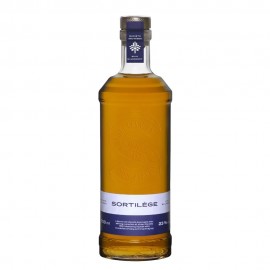
Sortilège Wild Blueberry is a Canadian whisky liqueur with maple syrup to which the delicious flavours of the famous wild blueberries from Lac Saint-Jean have been added. The result is a liqueur of remarkable finesse, both fruity and slightly sweet. It is enjoyed chilled, on the rocks, and its richness also lends flavour to coffee and cocktails. You can also serve it neat to conclude an excellent meal. Sortilège is crafted from an original recipe by the descendants of the first settlers of Quebec, who brought New World whisky-making techniques and added a local native ingredient, maple syrup, to create an entirely unique new spirit.
och Arroqueno is made with wild maguey Arroqueno (agave Americana). Typically, this agave can take up to 20 years to mature, before it is pit roasted in a traditional fashion. Given the length of time needed to grow this elegant agave, sustainability of Arroqueno has become a big issue. The Koch Arroqueno is made by Adrian Bautista in Rio de Ejutla, Oaxaca. This mezcal has high fruity notes with hints of earth and herbs, clay and smoke.
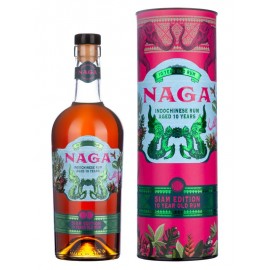
TASTING NOTES :
NOSE : The rum has a smooth and rounded structure, characteristic of NAGA rums.
PALATE : Roasted flavors emerge and support the elegant notes of nuts, vanilla, and tobacco.
FINISH : The finish is long, with the whole experience enhanced by very elegant woodiness.
L'Absinthe La Fée Parisienne is the most authentic expression of classic green absinthe.
Made from 100% natural ingredients, this absinthe is distilled according to a traditional 19th-century recipe.
The result is a superior absinthe of remarkable quality, both powerful and balanced, adhering to ancient techniques to capture the essence of great creative spirits like Van Gogh, Rimbaud, and Toulouse-Lautrec.
La Fée Parisienne is the first traditional absinthe distilled in France since the ban was lifted in 1915.
Any certified mezcal will state the scientific plant name using the term Agave, while the common name that is used in the community and by the producer is listed as Maguey. For example, Maguey espadin is an Agave angustifolia.